
Build the capacity
to shape what comes next.
Robotics and AI education require more than equipment: meaningful curricula, practical experimentation, engineering workflows and opportunities for applied research.
An environment for
learning by doing.
A structured approach to planning AI, robotics and embodied-intelligence learning environments for universities and technical institutions.
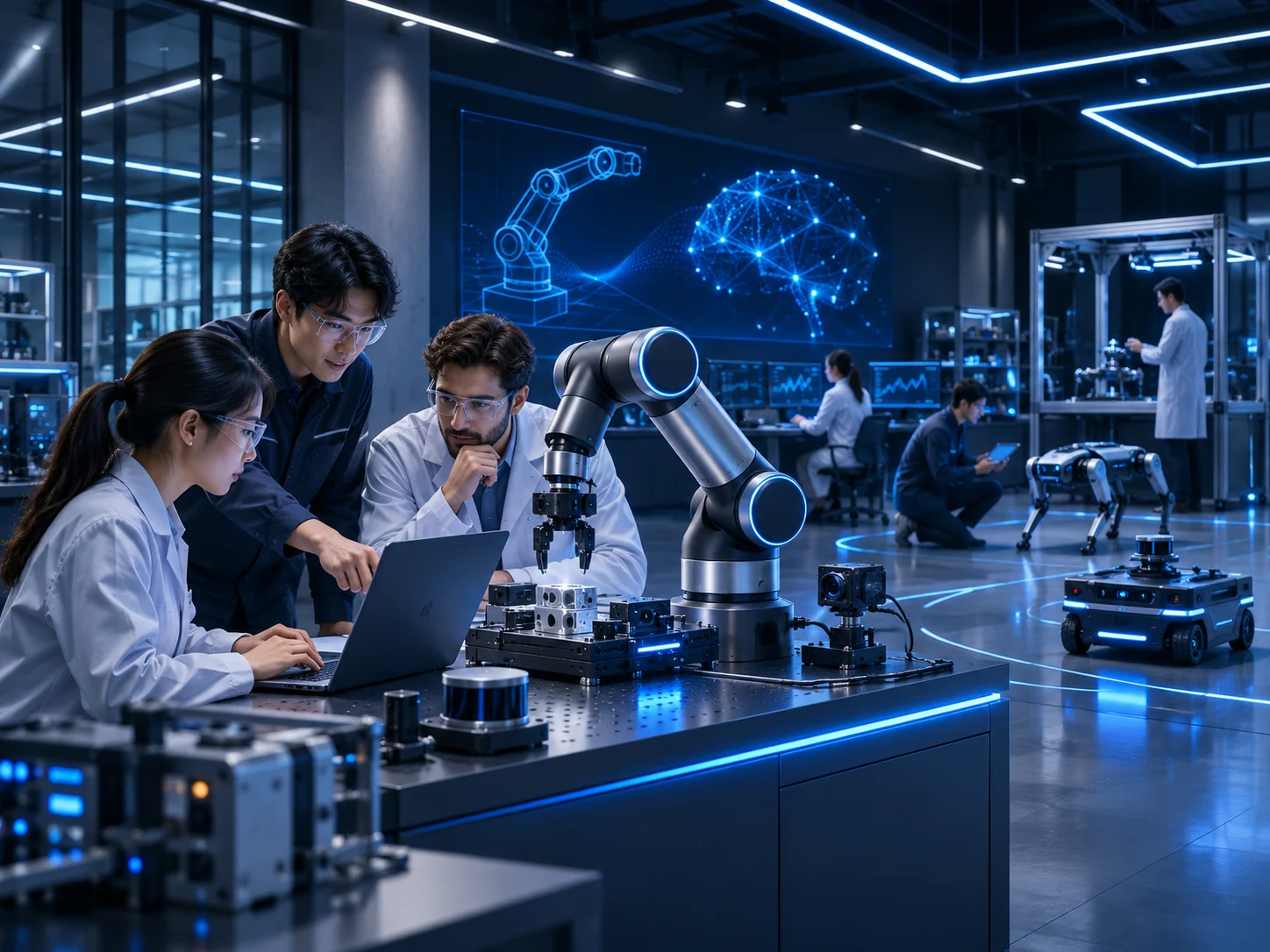 ILLUSTRATIVE LAB CONCEPT
AI & programming
Foundations for intelligent systems, perception and robotics software.
Robotics platforms
Hands-on systems suitable for exploration, control and experimentation.
Experimental workflows
Defined exercises, evaluation methods and lab operating practices.
Instructor enablement
Training plans, technical guidance and skills transfer where agreed.
Different institutions.
Different starting points.
The following are example focus areas rather than pre-packaged products or published prices.
Foundations Lab
Robotics, coding, sensing and introductory machine intelligence.
Applied AI & Robotics Lab
Integration of perception, control, AI experimentation and intelligent platforms.
Embodied Intelligence Research Lab
Advanced physical AI, humanoid-oriented experiments and research workflows.
Start with educational outcomes, not a shopping list.
Every proposed laboratory should have a reason to exist.
We would begin with the target audience, courses or research goals; identify required platforms and infrastructure; and plan how the institution can maintain and develop the capability over time.
- Academic and technical requirements
- Equipment and facilities concept
- Instructor enablement and learning pathways
- Research relevance and future scalability
Planning an AI or robotics laboratory?
Share your institution, program goals and expected learning outcomes. We can start with a focused exploratory discussion.